I fundamentally work and think playfully. As a non-linear thinker, I do not follow standard playbooks. I operate outside predictable logic, approaching challenges from a purely artistic perspective. By reframing problems and spotting patterns differently, I discover unconventional, out-of-the-box solutions.
Whether working with Game Engines, Neuro-sensors, or Custom Hardware, I explore technology on a deep system level. I possess a systemic understanding that allows me to grasp complex structures holistically and see how every component communicates within a vast network. I use AI as a tactical, highly precise instrument, not as an inflationary buzzword or a lazy fix for flawed concepts. I read code and can precisely communicate with programmers or machine learning models to execute my creative vision and ensure a flawless setup.
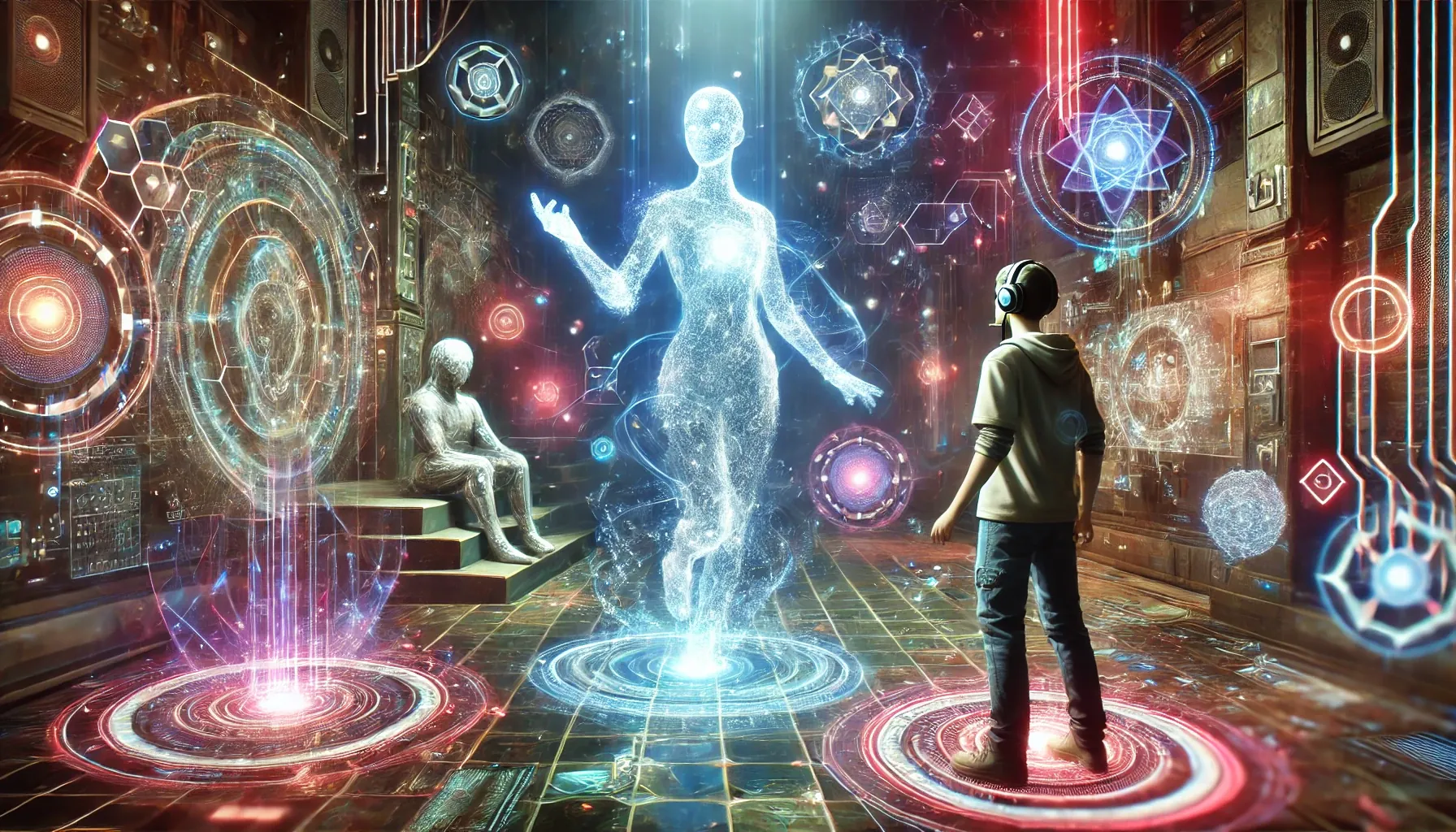
My true drive is the joy of creation. I reshape technologies to build Immersive Experiences that trigger fascination and feel like genuine magic. I construct unexpected interactions: between human and machine, nature and AI, or human and nature, mediated by the system.
My journey began early: At four, I flew in Flight Simulator 3.0. By 1996, I was modifying Command & Conquer code. The absolute turning point arrived in the late 90s with the level editors of Unreal Tournament. What I previously built with Lego bricks, I could now continue digitally, completely devoid of physical limits, driven by interactive gameplay logic. There was no limitation of bricks, no restriction of forms, and no rigid real world physics. The digital realm offered me boundless creative freedom to design my own building blocks and explore interactive realities using Game Engines (Source Engine, CryEngine, Unreal Engine, Unity3D).
I studied Media Art at the HfG University of Arts and Design, closely associated with the ZKM | Center for Art and Media in Karlsruhe, located right next door in the exact same building. The ZKM is the largest media art institution worldwide and a Top 5 museum in this field. Often referred to as the digital Bauhaus, the environment was highly exclusive: only about ten students were accepted per year; I was one of roughly 40 media art students in total. I graduated with absolute distinction (Grade 1). During my studies, I also co-founded the local GameLab and shared my knowledge through seminars and workshops.
Building on this foundation, I pursued a project-based PhD in Creative Media at RMIT Melbourne, backed by a fully funded international research scholarship. Based at the Centre for Game Design Research and the GEElab (Games & Experimental Entertainment Laboratory Europe), my doctoral thesis, titled “Hacking as a playful strategy,” investigated how subverting technical rules and structural systems can unlock entirely new forms of human experience and interactive expression.
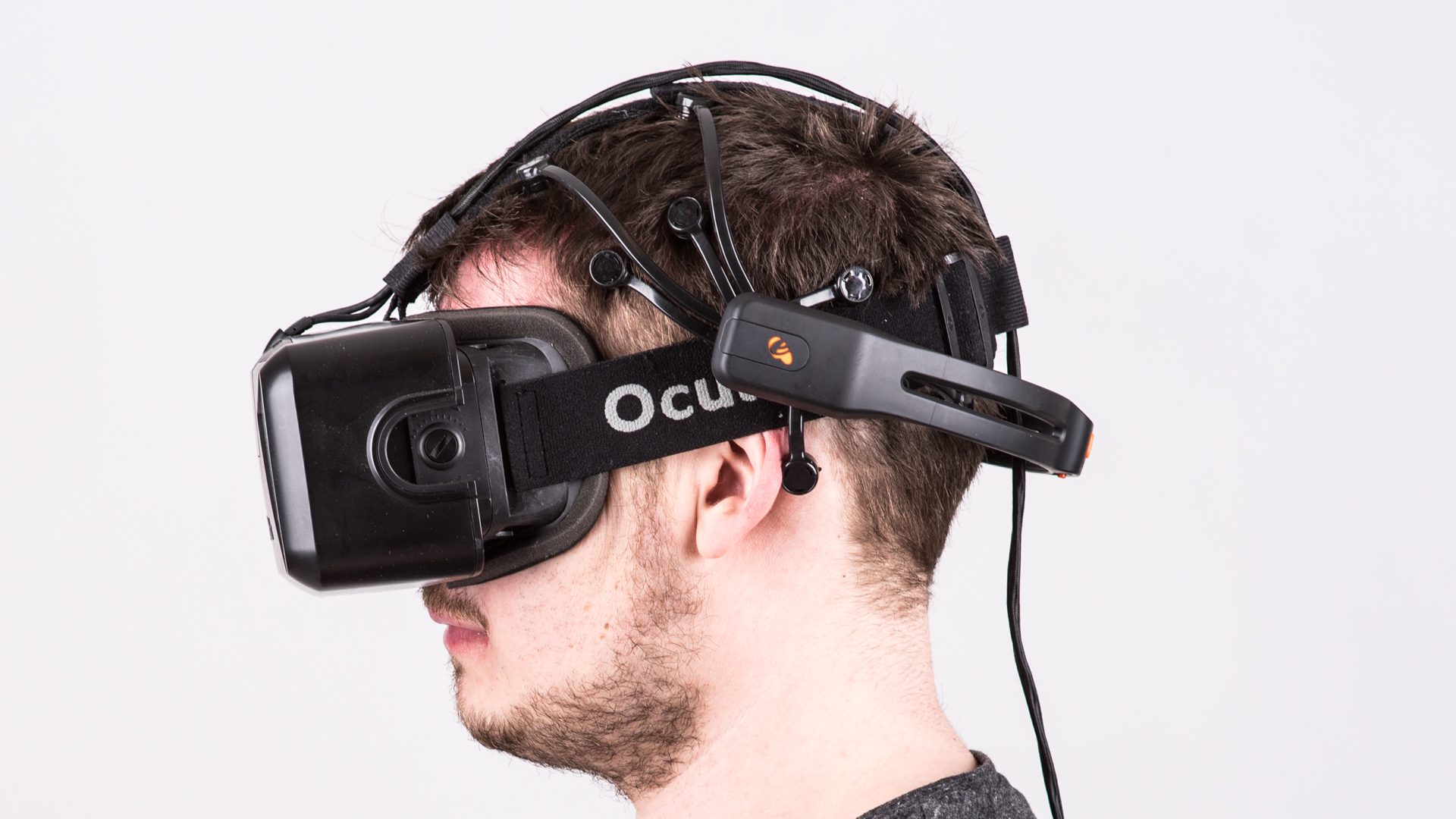
This deep dive into behavioral systems culminated in Ride Your Mind—a vanguard Neuro-VR installation driven entirely by Brain-Computer Interfaces (BCI). By capturing and analyzing subconscious human biology and neural data, the system translated internal physiological states into a generative digital space in real time. The project served as the ultimate manifestation of my research, proving how playful, non-linear systems can fundamentally dissolve the boundary between the human mind and digital reality.
If you examine my work, a clear pattern emerges: I engage with deep tech topics years before they become global hypes. Being a non linear thinker allows me to stay consistently ahead of the curve. Long before commercial adoption, I playfully and artistically dissect these technologies to generate massive public attention, educate, and provoke critical discourse.
I drove the conversation on Serious Games in 2010. I built immersive installations with Real time 3D and VR long before the Oculus Rift existed. I developed adaptive neuro experiences via Brain Computer Interfaces (BCI) in 2015, and I have been deeply engaged with applied Artificial Intelligence since 2013.
Crucially, I do not keep these early insights hidden in the lab. I actively share this knowledge. Through international keynotes, experimental workshops, and university seminars, I pass my findings on to students, researchers, and industry leaders. I do not ride trends. I decode, shape, and critically question them through media art and public discourse long before they reach the mainstream.
I started my first company at the age of 18. I founded pimp my notebook, selling laptop stickers at a time when putting a sticker on your holy, expensive notebook was almost unimaginable. This perfectly mixed business and creativity in my early years. Today, I remain a true hybrid between these two worlds, seamlessly bridging artistic exploration and commercial innovation.