Brain-Computer Interfacing (BCI) technology has traditionally been driven by medical and rehabilitative applications. RIDE YOUR MIND subverts this constraint, bringing the technology into the realm of media art and experimental game design.
Instead of standard physical gamepads, the player navigates an abstract virtual landscape purely via internal focus. By measuring salivary-moistened electroencephalogram (EEG) signals, the game establishes a direct, real-time biofeedback loop between the subconscious mind and the computational environment.
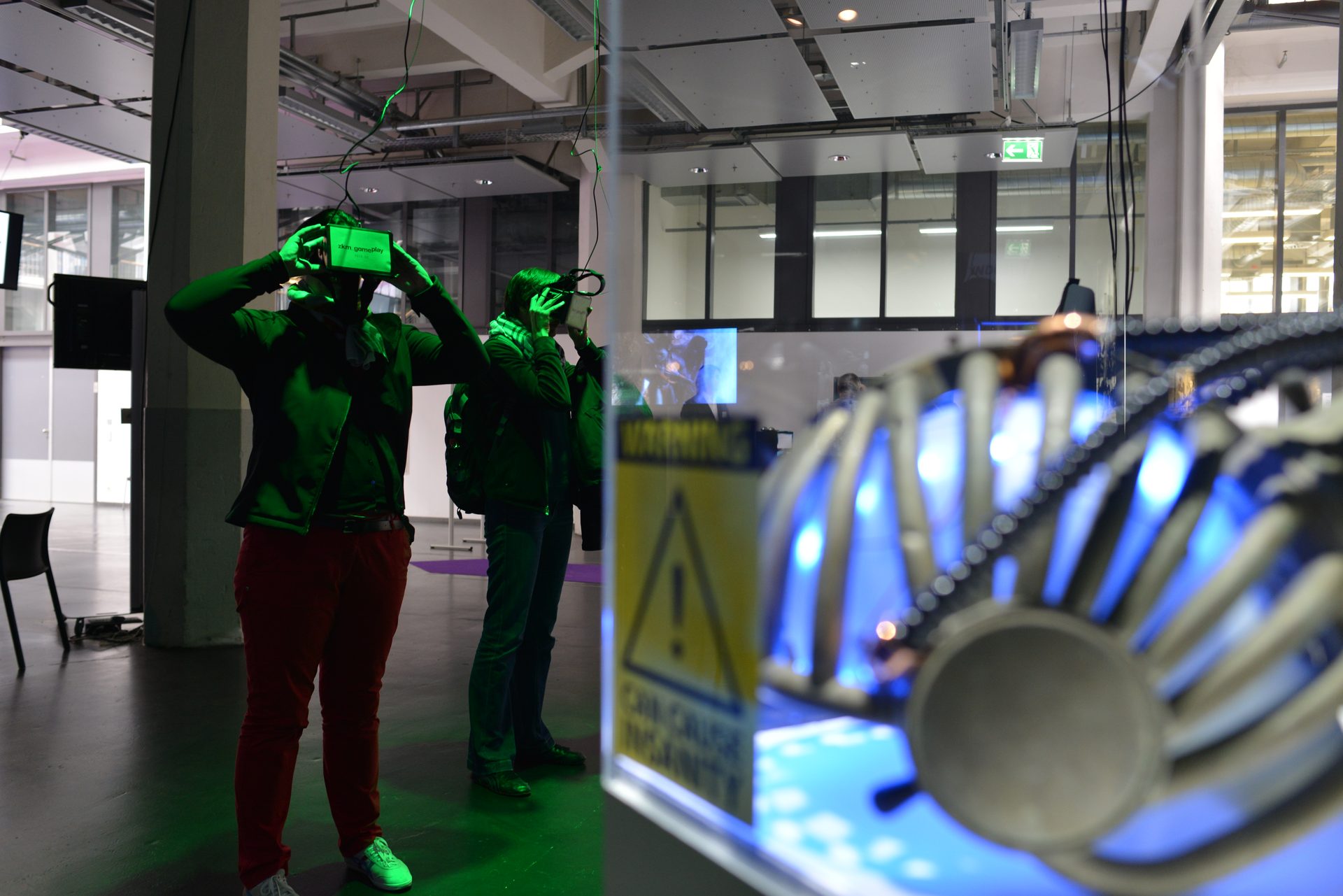
The virtual space adapts in real-time to the visitor's focus and relaxation levels—mapping alpha and beta wave fluctuations to environment speed, ambient audio frequencies, and the brightness of physical DMX lighting inside the gallery space.
The gameplay loops of Ride Your Mind categorize the user's brainwave metrics into three distinct states of consciousness. Each state triggers dynamic visual overlays and restructures the environment's rules:

The baseline state. Moderate focus levels. The landscape flows at a steady pace, presenting highly structured geometry and stable environments.

Achieved through deep relaxation and alpha wave peaks. The landscape expands, colors shift to a glowing green hue, and structural geometry becomes smooth, rewarding mental stillness.
Triggered by intense beta/stress waves or lack of cognitive focus. The virtual world fragments, colors shift to harsh warnings, and physics become erratic, reflecting mental tension.
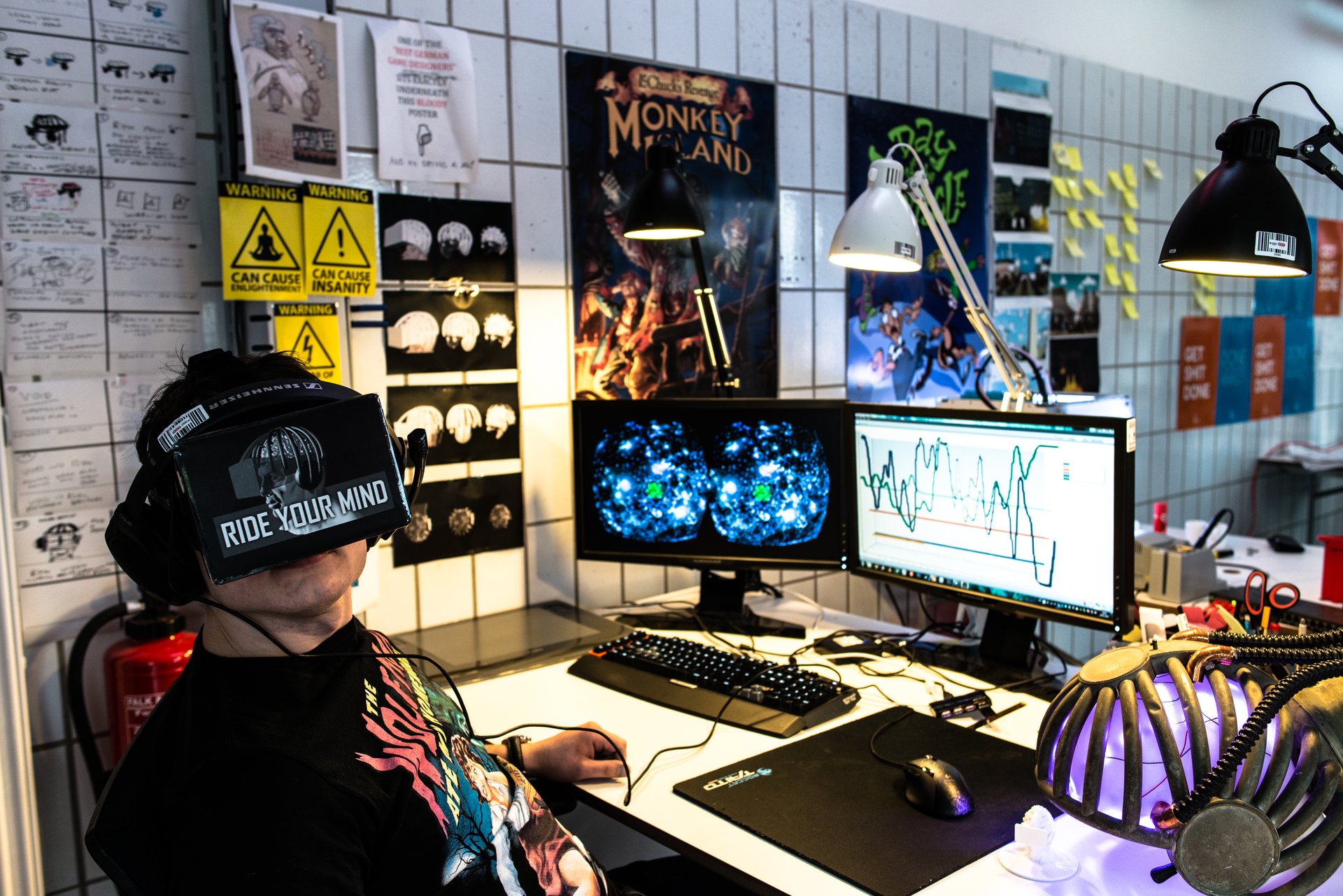
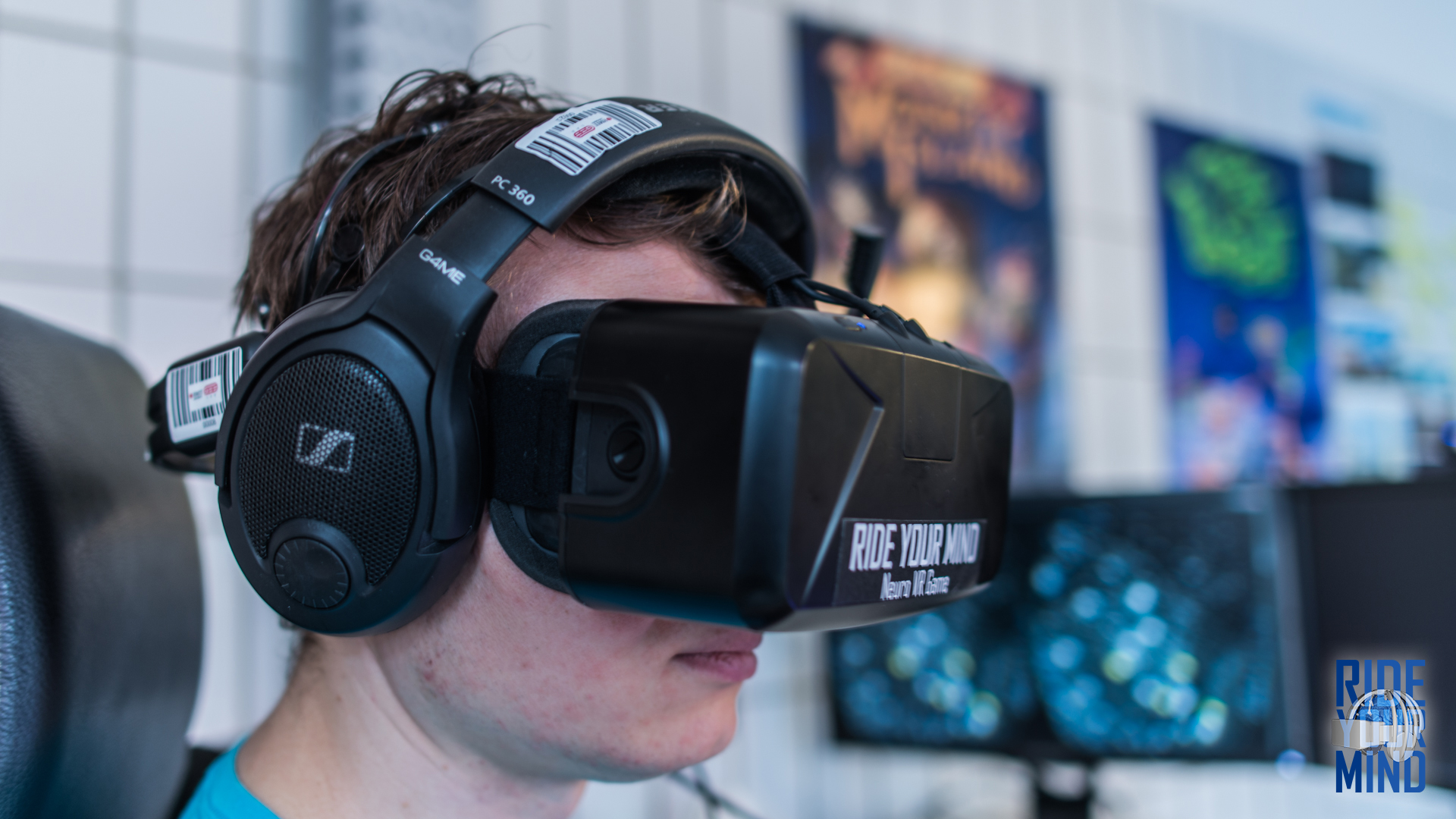
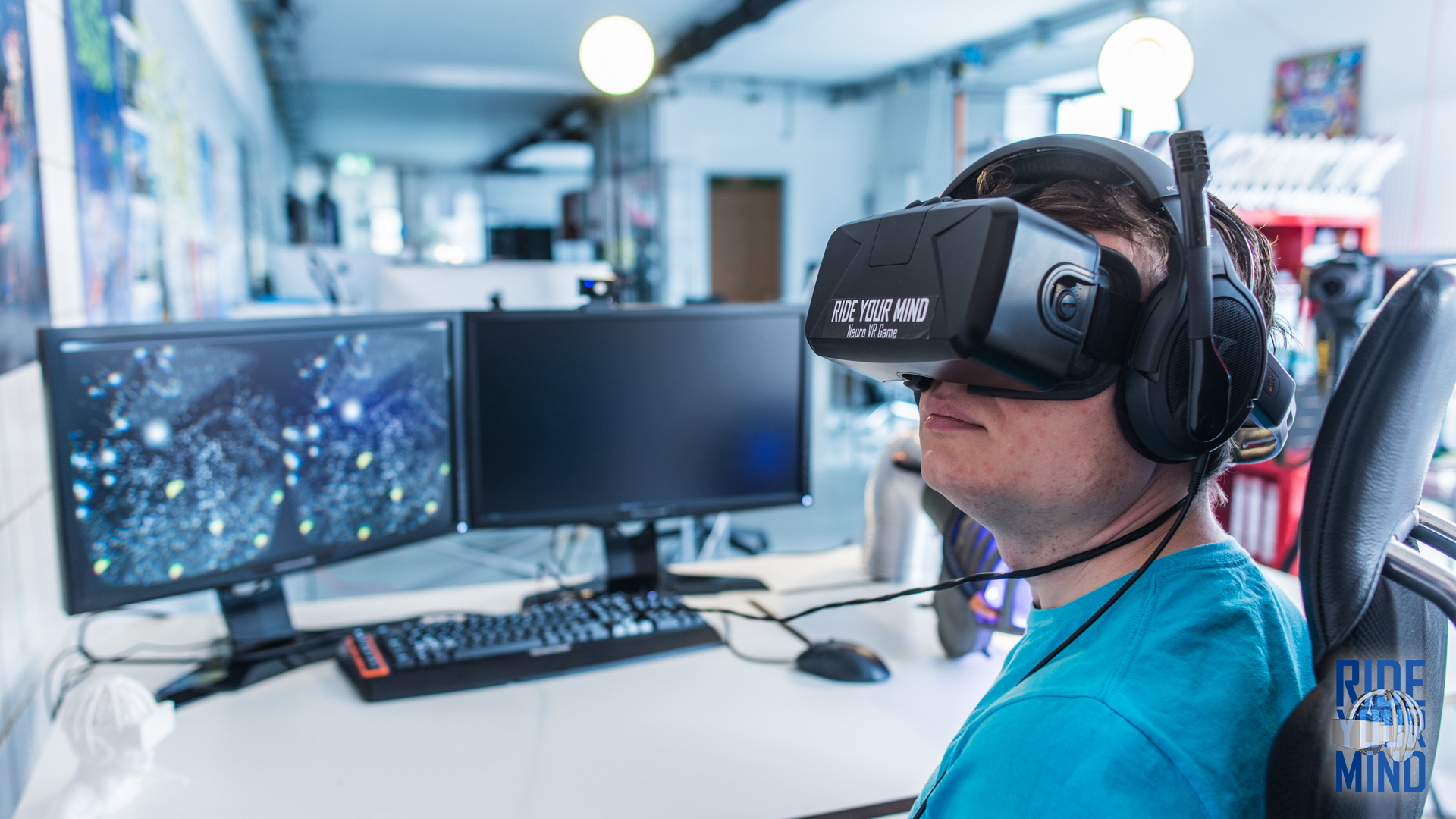
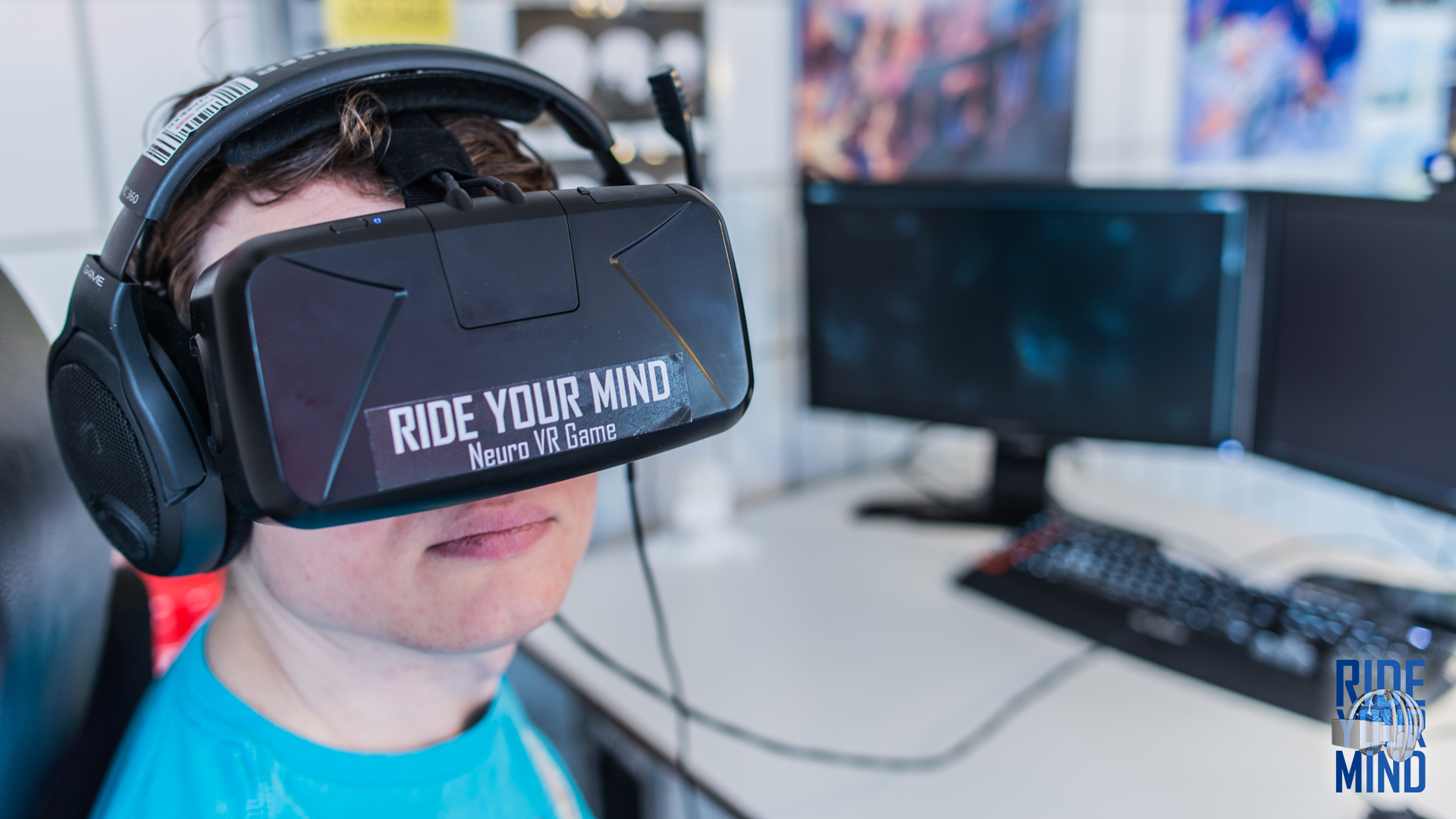
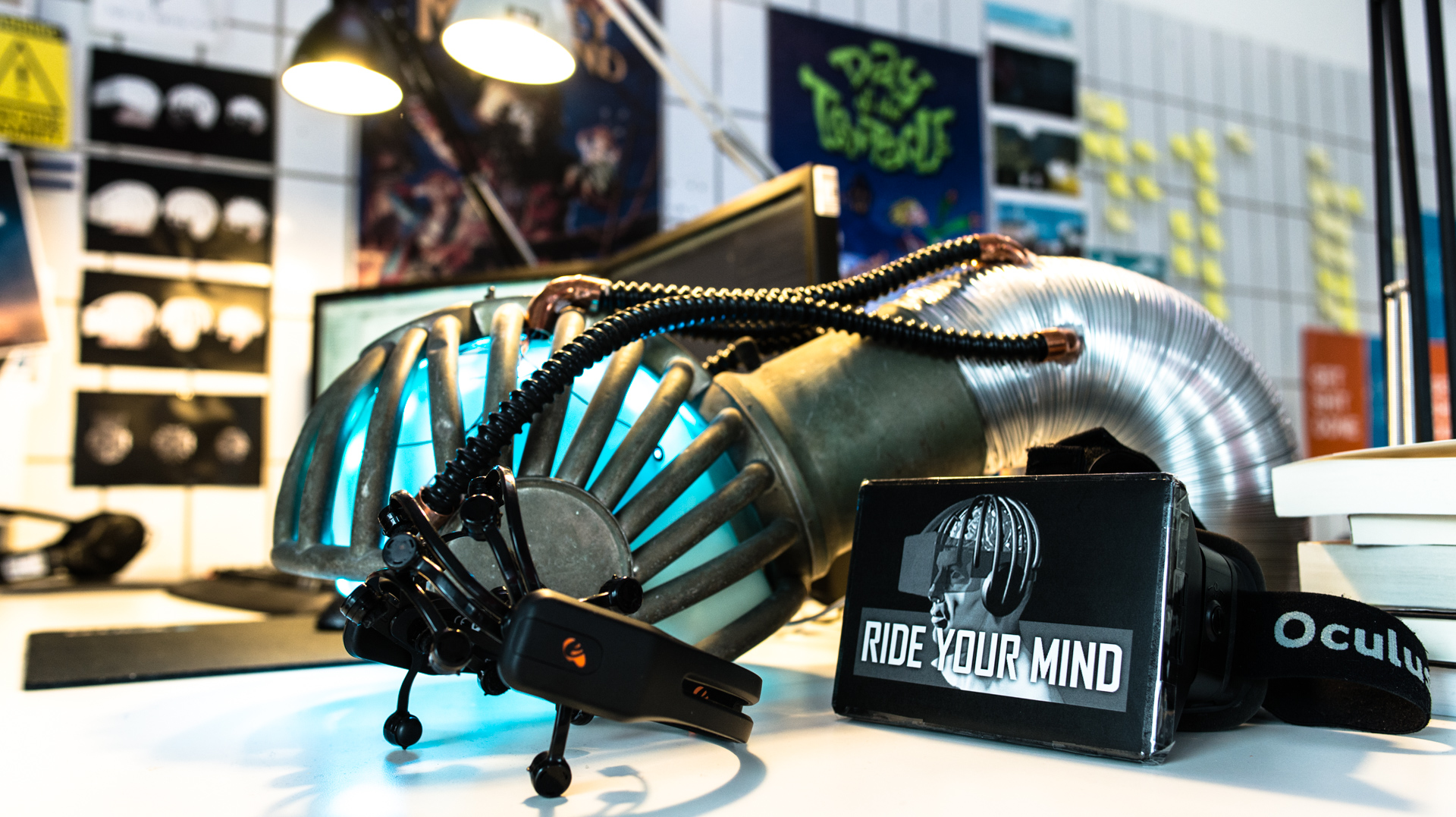
To isolate the user from external disturbances and achieve high-quality EEG readings, Jens Stober designed and crafted a custom NeuroVR Helmet. Styled as a physical steampunk art sculpture, it functions as a cybernetic interface.

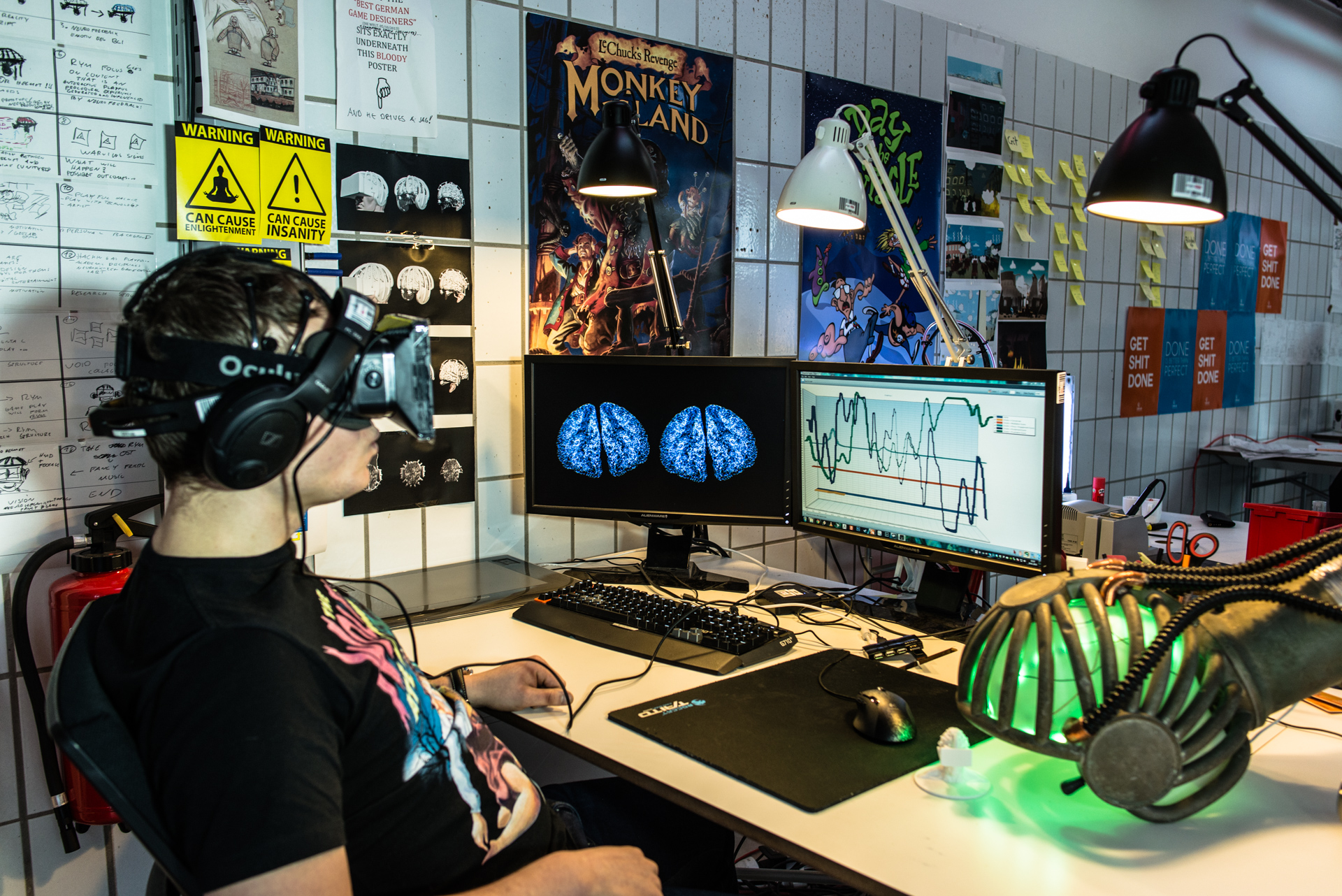
Provides stereoscopic 3D vision, isolating the player's eyes from external stimuli. This visual isolation significantly reduces eye-movement artifacts in the EEG signal.
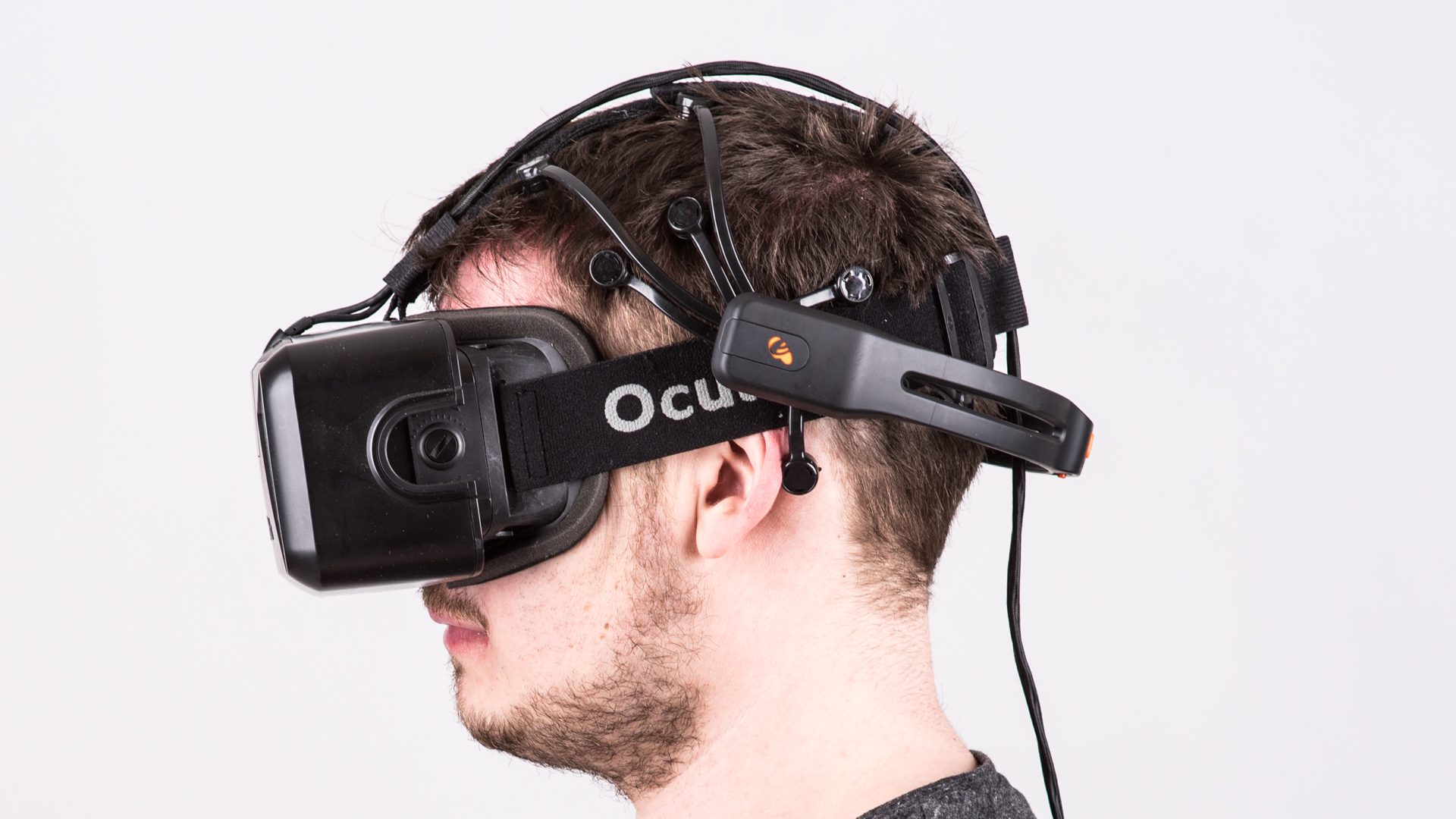
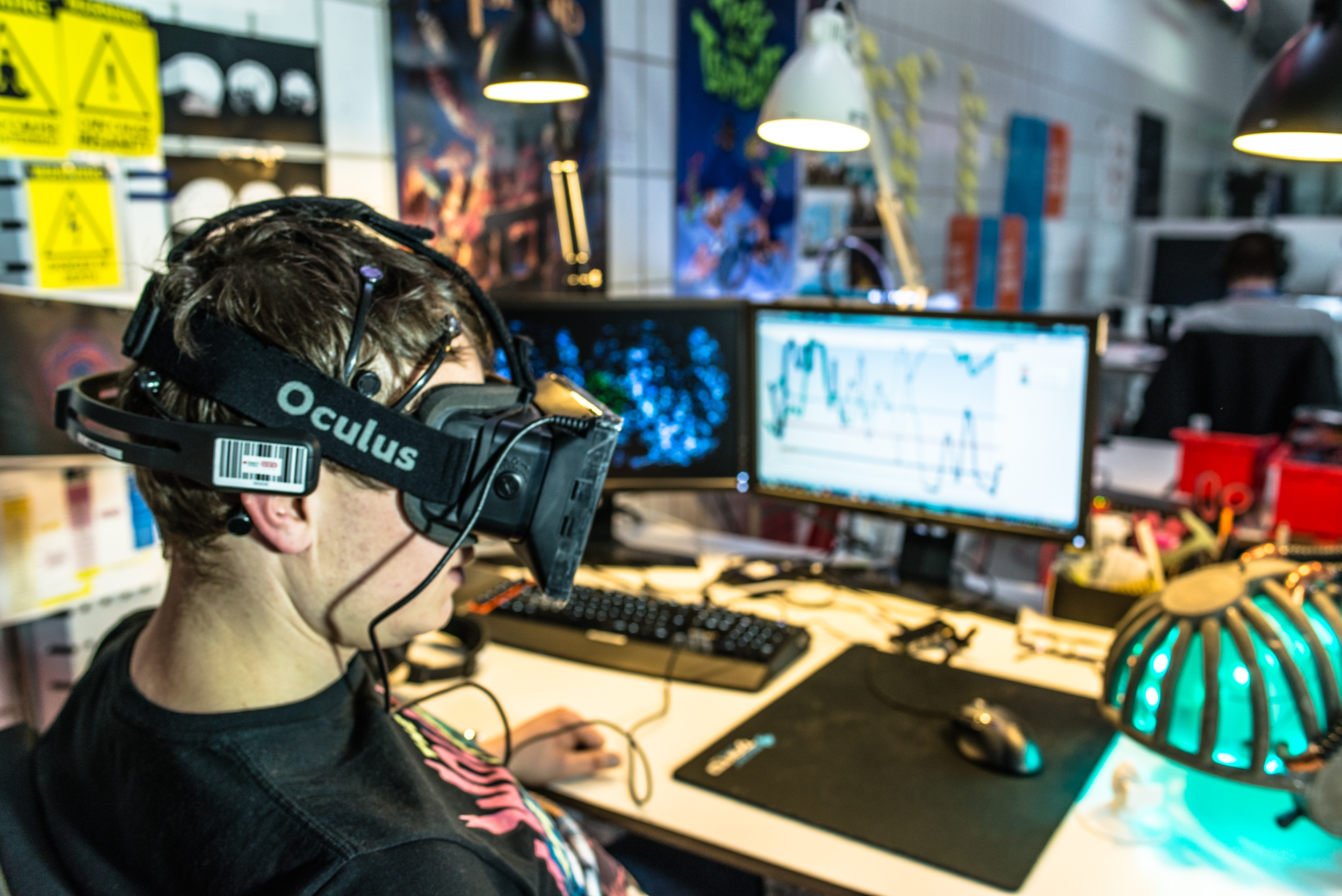
Saline-moistened sensors read cognitive, affective, and expressive signals (alpha, beta, and theta wave metrics) directly from the scalp.
Completely dampens ambient noise to facilitate the deep focus required for biological feedback navigation.
Wrote a custom data communication layer linking the EEG client software to the Unity3D game engine, allowing real-time mapping of mental focus values to game variables.
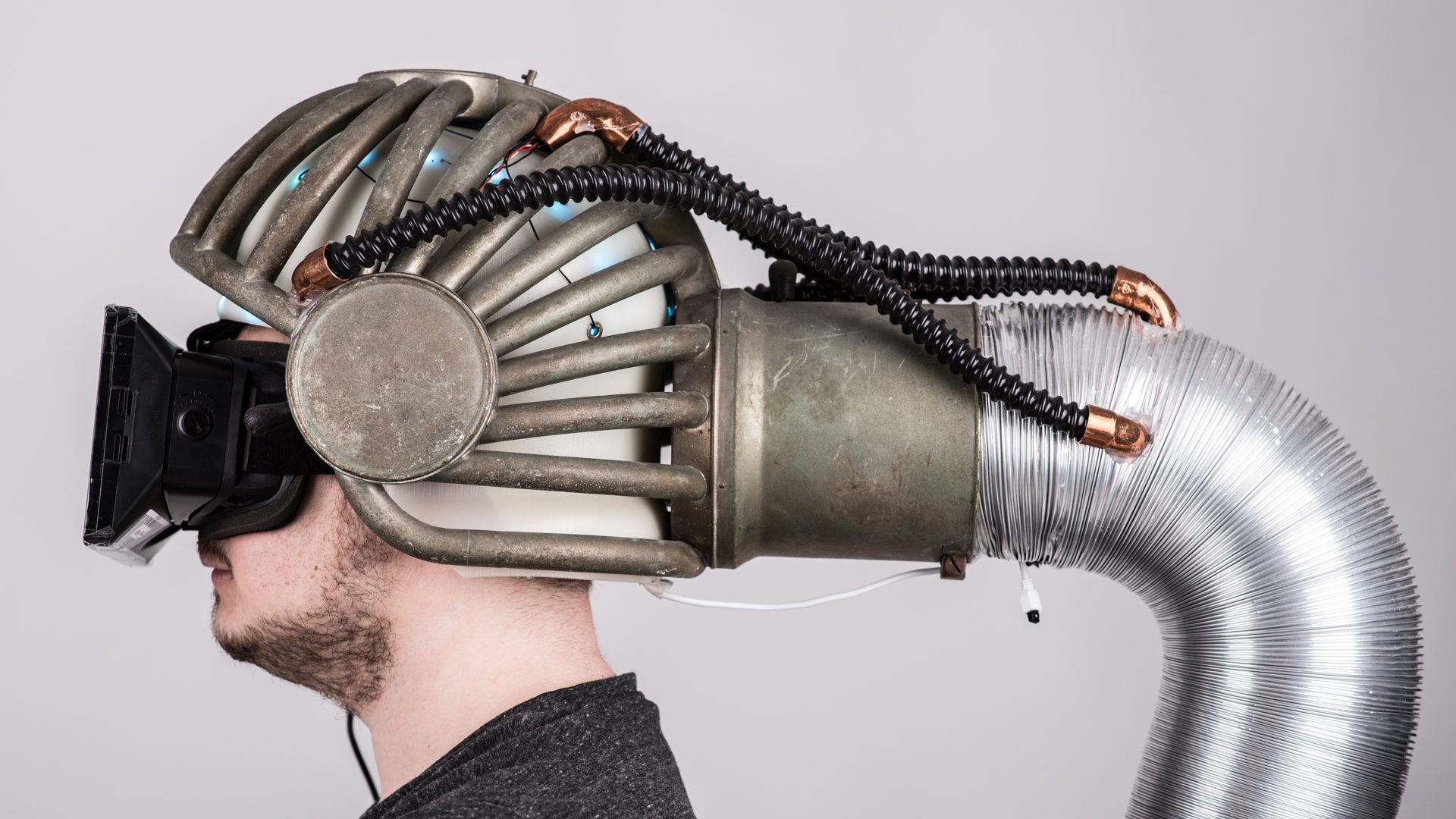 [FIG 05 // NEUROVR HELMET - FRONT]
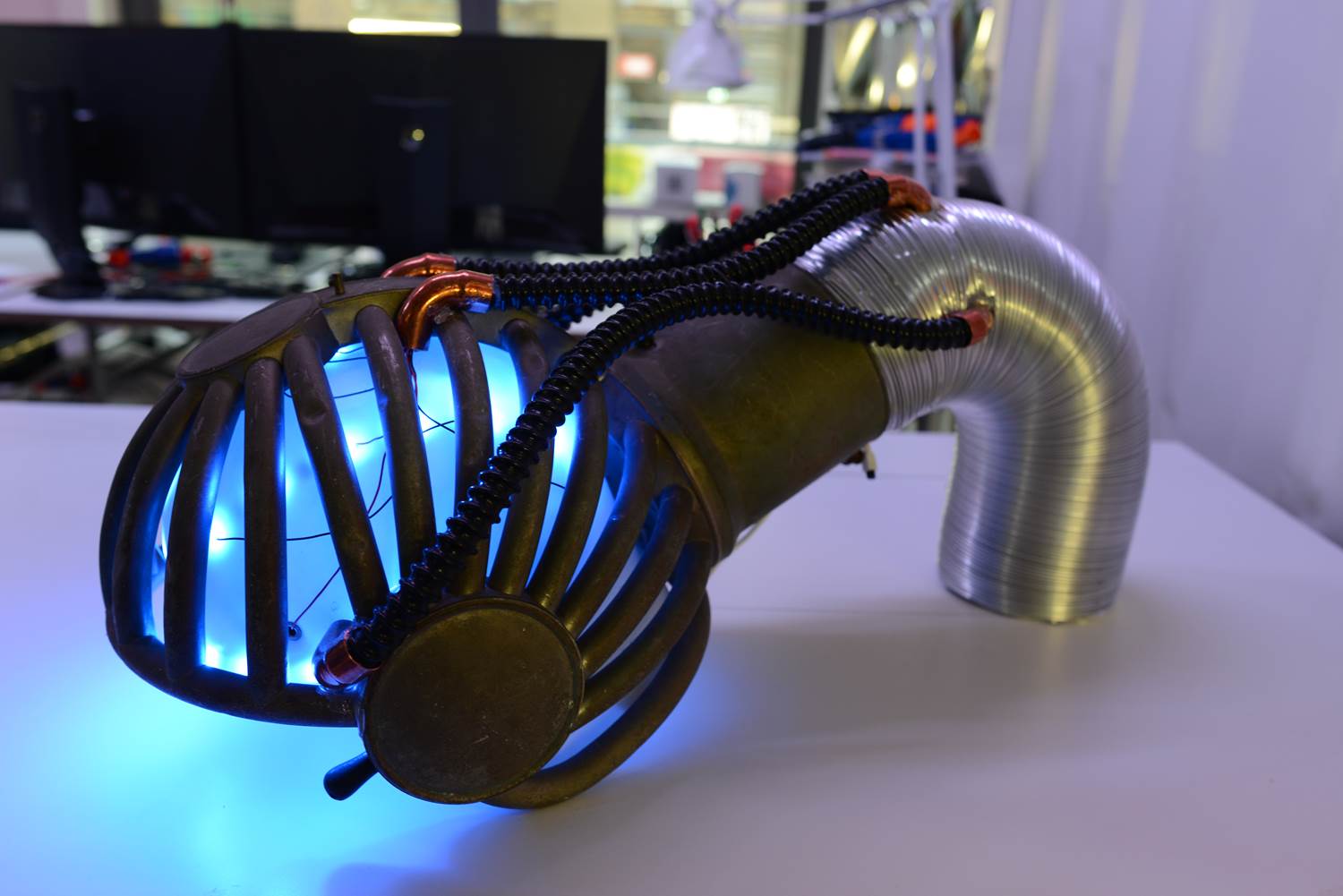 [FIG 06 // NEUROVR HELMET - SIDE]
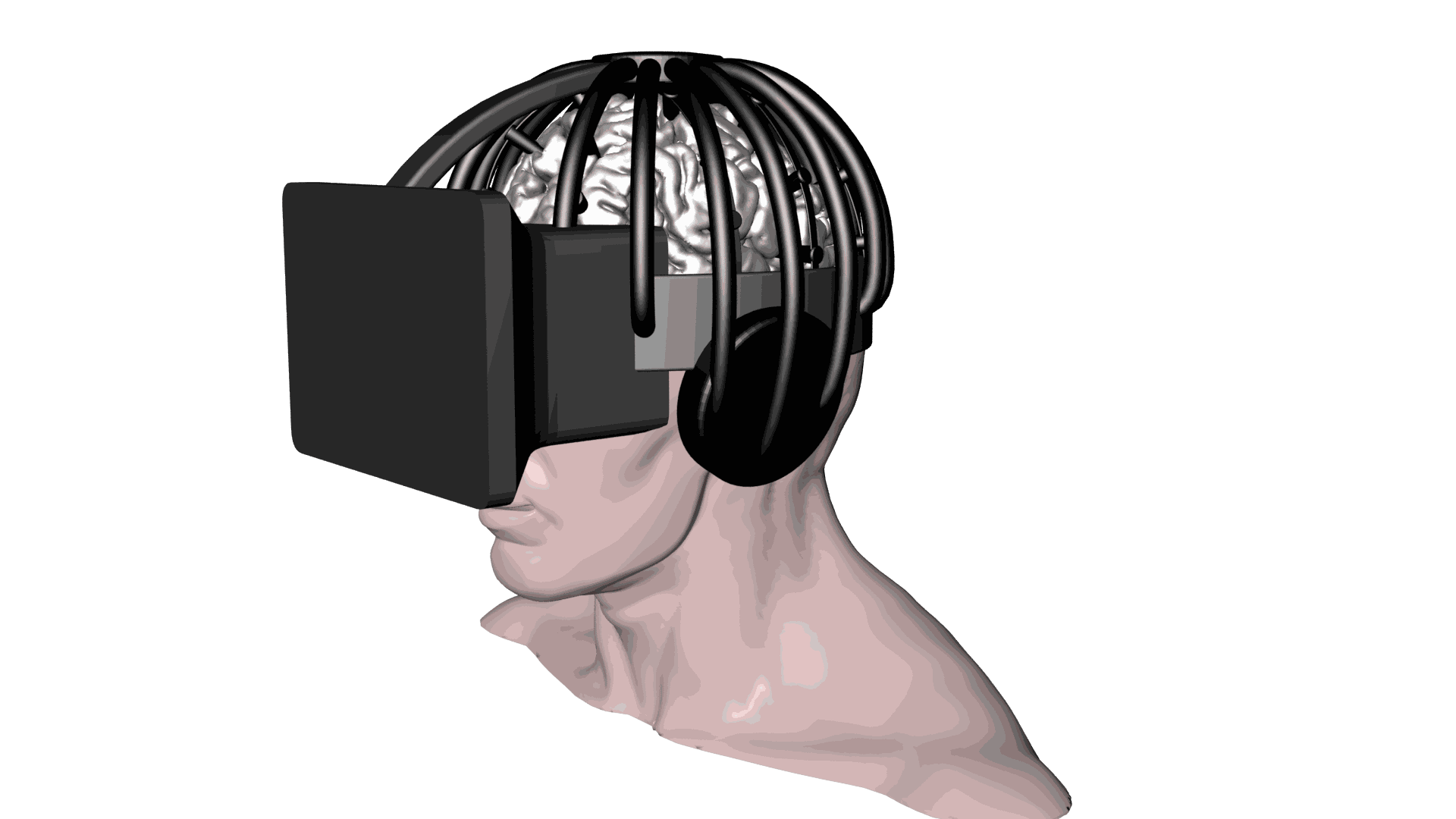 [FIG 07 // EEG SENSOR MAPPING]
Jens Stober's PhD exegesis identifies four key strategic design pillars of hacking, using them to map neurofeedback into a playful media art experience:
Integrating biometric sensors and digital VR gameplay. By grafting brainwave readings onto virtual environments, the system expands the traditional boundaries of virtual worlds.
Recontextualizing medical hardware (EEG) and military tech (early HMDs) into a playful, artistic entertainment framework. It breaks the commercial intention of the hardware to explore "art and beauty".
Moving beyond active physical controls (mouse/keyboard/gamepads) to passive, subjective, and subconscious mental states. Control is achieved through introspective focus, not physical motion.
Subverting the traditional action-reaction loops of games. When immediate keystroke results are replaced by organic biofeedback, the player must learn to manage internal tension instead of acting externally.
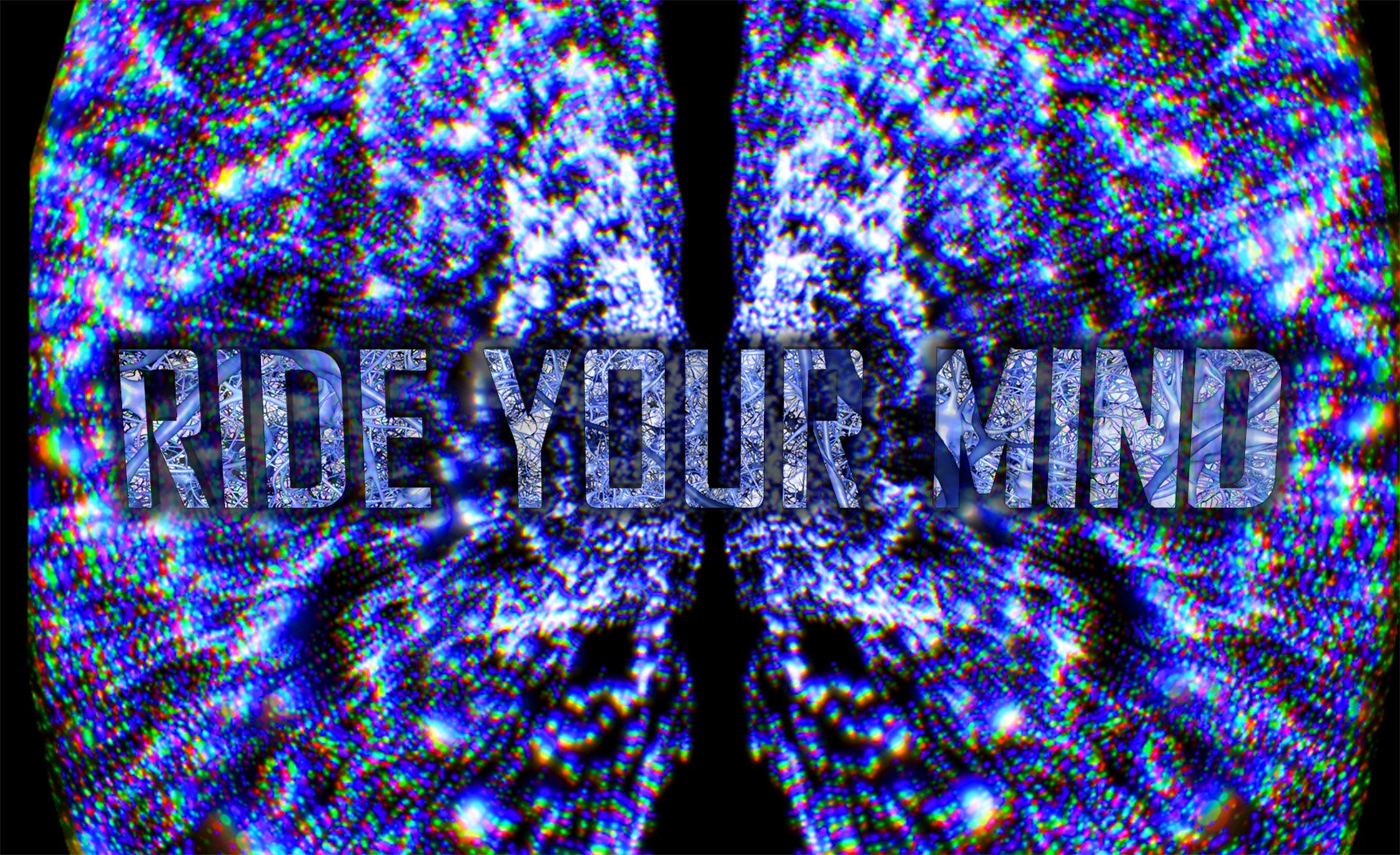
The virtual landscapes of Ride Your Mind—developed as the VOID Series—utilize generative visuals. The density of shapes, the speed of corridors, and the brightness of portals mirror the user's focus metrics:
Explore the gameplay mechanics, steampunk hardware integration, and artistic concept of Ride Your Mind through the following video recordings: